









As we celebrate the 250th anniversary of the Declaration of Independence of the United States, let us pause to reflect upon our foundations, and once again seek the hand of the Providence that made us the great nation that we are.
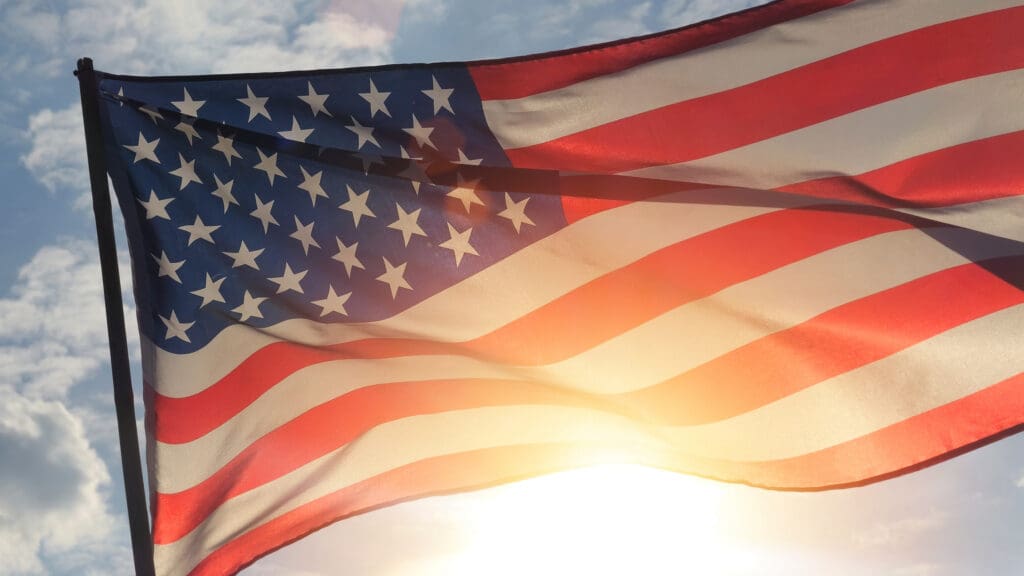
Out-of-town visitors to a baseball game at Baltimore’s Oriole Park at Camden Yards notice that we have a tradition: When we sing the penultimate line of our National Anthem, “O say does that star-spangled banner yet wave…,” in honor of our home team – whom we affectionately call “the O’s” - we will yell the beginning “O!” at the top of our lungs. It’s a community thing; it celebrates who we are as Baltimoreans.
The National Anthem of the United States is the only anthem of any country in the world that ends with a question mark. Look carefully:
“O say does that star-spangled banner yet wave
O’er the land of the free and the home of the brave?”
We will not recount in this blog the full story of how our anthem was written (except, maybe, to emphasize that it was written in Baltimore…). What is important to note is Francis Scott Key penned his immortal words, and its thoughtful question, from the heart-pounding realities of his own wartime experience. Held captive as a prisoner-of-war on a British naval vessel, Key watched helplessly as the British relentlessly pounded Fort McHenry with cannon-fire throughout the night of September 13, 1814.
The question mark in his heart was real, and it was not just a theoretical problem. Whether or not that flag was flying over the fort in the morning would portend either victory or defeat for the entire country during the War of 1812. Baltimore served as a vital gateway to the rest of the country. Coming on the heels of the burning of the White House and the partial destruction of Washington D.C. the previous month, a successful attack on Baltimore would leave the rest of the country open to the advancing British forces. The experiment started in 1776 would come to an end.
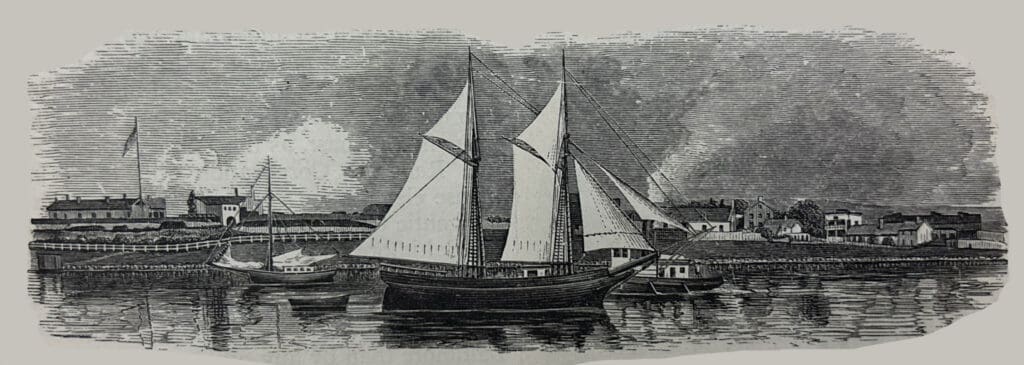
When the fog and smoke cleared in the pale dawn light the next day, the answer to the question became clear. The flag was still flying: the British forces has been stopped.
A flag is a symbol. Not in the abstract sense that “√” is the mathematical symbol for “square root,” or “∞” is the symbol for “infinite.” A flag, made of tangible fabric, represents the fabric that binds its society together. The red, white and blue of the American flag is not just a beautiful blend of colors (though it is!), nor are the stars and stripes merely a visual reminder of our humble beginnings and what we have become since. The flag of the United States represents an idea, an idea that is at once so strong and yet so fragile. It is the idea that a very diverse group of people can be brought together into a peaceful union of shared purpose, that they can live together in the balance of freedom and responsibility, where each person’s intrinsic value is recognized and defended, and where the land is owned by and the power lies with the people themselves and not just with a ruling class.
People like to say that these ideas began with the Greeks many centuries ago. Perhaps they did. Perhaps there were occasional experiments where a nation tried implementing principles of self government and equal opportunity. But where else have these ideas been amalgamized together into the grand beacon of light that has become the United States of America? What other nation has used its power and its wealth to expand the scope of freedom around the world? Nobody has ever claimed that the projection of the United States has been perfect. We have certainly made our mistakes, sometimes very regrettable ones. But, as the saying goes, “people vote with their feet”: The #1 desired destination for migrants worldwide is still the United States. No other nation even comes close.
“O say does that star-spangled banner yet wave…?”
The last time that question was asked was not in 1814, at Fort McHenry. It was not in 1863, on the fields of Gettysburg. It was not in 1941, in the waters of Pearl Harbor. It was not in 2001, at Ground Zero, in New York City.
The last time that question was asked was but moments ago, for it is a question that never stops being asked.
Francis Scott Key endured a kinetic war. Many since have experienced the same. Every victory we have won has been costly, but it has only bought us a pause before the next conflict.
“O say does that star-spangled banner yet wave…?”
It is a good question. It is a legitimate question. If we want to keep our republic strong and free, we must follow the counsel given by Key himself. What we sing as our National Anthem is actually just the first verse of a longer poem. If you read the whole poem, the question mark at the end of the first verse is transformed into a firm conviction in the fourth:
O thus be it ever when freemen shall stand
Between their lov’d home and the war’s desolation!
Blest with vict’ry and peace may the heav’n rescued land
Praise the power that hath made and preserv’d us a nation!
Then conquer we must, when our cause it is just,
And this be our motto – “In God is our trust,”
And the star-spangled banner in triumph shall wave
O’er the land of the free and the home of the brave.
Many debate about the true nature of the religious beliefs of our Founding Fathers, and how those beliefs shaped their thoughts and actions. One thing that is without doubt, however, is that those responsible for bringing our great country to birth understood that its success would not be based on their own ingenuity. They believed (and openly expressed that belief) that there is a Creator Who not only brought the world into existence but Who sustains and directs it, Who raises up nations and brings down nations according to His eternal purposes. Our Fathers set themselves to seek the blessing of our Creator by trying, to the best of their ability, to understand and implement His purposes. The official adoption of “In God We Trust” as our nation’s motto in 1956 was just that, its official adoption. From the beginning, it was our aspiration.
Each of us, as members of a democratic republic, have a responsibility to do our part to bring the unity of our shared purpose to fruition. The experiment that was started in 1776, and survived the attacks of the War of 1812, can only be kept with the correct use of the freedom gained. “Nothing is more wonderful than the art of being free,” wrote Alexis de Tocqueville as he penned his thoughts in Democracy in America after traveling the United States, “but nothing is harder to learn how to use than freedom.” As a people, if we choose to live by our first principles, and humble ourselves before the God who controls history, we believe that our star-spangled banner can yet wave for generations to come.
Here at Carefree, we are proud of the part that Baltimore played in reminding us that there is a thread of unity that binds us together. We are aware that, as Americans, we have a responsibility to do our part to keep that fabric of unity strong. In this be our motto “In God is our trust!”
God Bless America!


















+ Show / Hide Comments
Share to: